How to Sharpen High-Alloy Stainless Without Chasing a False Apex
You've been at it for twenty minutes. The bevel looks perfect. Mirror shine, even scratches, the whole deal. But the tomato still splits. The onion skins slide away like you're trying to cut water. Here's the thing: you didn't sharpen the edge. You sharpened *around* it. High-alloy stainless is a different beast. It doesn't behave like carbon steel. It doesn't telegraph its mistakes. It lets you build a beautiful, useless false apex and then silently judges your life choices every time you cook dinner.
What the False Apex Actually Looks Like
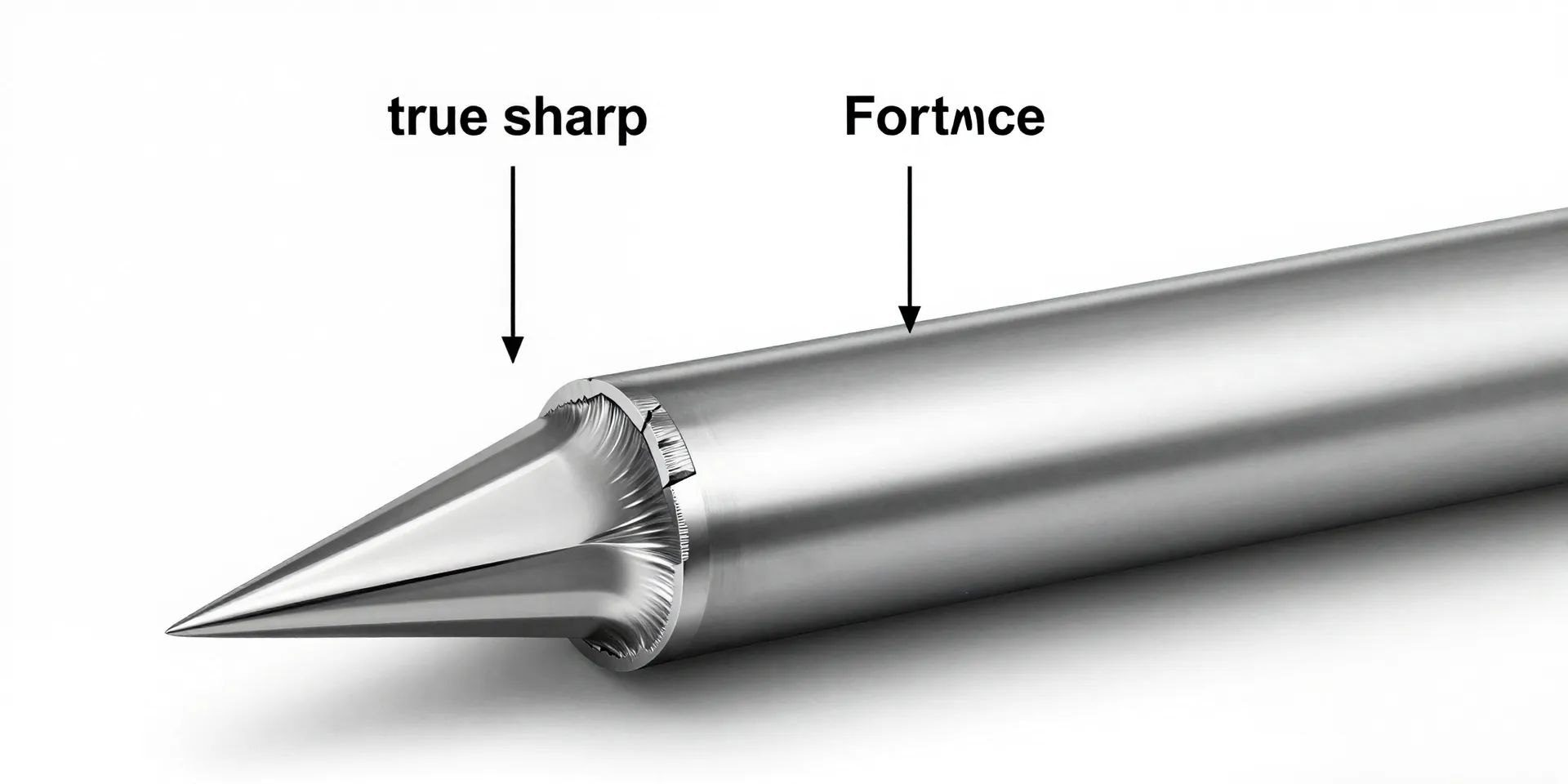
Most people think a burr is obvious. A little wire edge you can feel with a fingernail. Easy. But high-alloy stainless doesn't always play that game. Instead of a burr that hangs off one side, you get something worse: a micro-foil edge that stands straight up, supported by carbides that refuse to break off. The bevels meet. Technically. But the actual cutting geometry is a tent, not a wedge. You can even strop it and watch it fall over like wet grass. It feels sharp for three cuts. Then it's back to brute force and anger.
Why High-Alloy Stainless Fights You
High-alloy stainless is loaded with carbides. Vanadium, chromium, niobium. These particles are harder than the steel matrix itself. When you sharpen, your abrasive is basically trying to plow through a field full of rocks. The matrix wears away. The carbides don't. They get dragged, they smear, they create a false wall that looks like an edge but isn't. Carbon steel? The whole structure wears relatively evenly. You feel the burr form, you feel it break off. Stainless just builds a micro-ramp and dares you to figure out why your knife won't bite.
The Grit Jump That Saves Your Sanity
Don't chase polish on your coarse stone. That's amateur hour. Get the bevel set with something aggressive. A 400 or 600 grit diamond plate. Establish your geometry fast. Then jump. Not to 1000. Not to 2000. Go straight to a fine ceramic or a high grit waterstone in the 3000+ range. The aggressive jump does something magical: it attacks the false apex differently than the true bevel. The foil edge and the burr get obliterated because they present differently to the abrasive than the supported steel behind them. The coarse stone builds the mess. The fine stone destroys it. Counterintuitive. But it works.
Deburring Moves That Actually Work
Stropping on leather is often the final nail in the coffin for a false apex. It polishes the foil edge. Makes it pretty. Makes it useless. Instead, after your final stone, cut into something soft but toothy. A cork. A piece of soft wood. The corner of a wine cork works stupidly well. Draw the edge through at a slightly higher angle than your sharpening bevel. You're not cutting. You're pulling the burr off by the roots. Then go to bare leather or newsprint. No compound. Compound is just another way to hide the lie. You want the edge naked and honest. If it still won't split a tomato, you haven't found the true apex yet. Go back. The steel isn't the problem. The technique is.